The Slade School of Fine Art.
Installation at the Main Library. University College London

¿Cómo se disponen las cosas en el espacio?
¿Cuáles son las melodías últimas y cuáles las energías que contienen?
“La Habitación Vacante” Juan Navarro Baldeweg
El Telar de Las Horas es una obra de creación colectiva para la que solicito colaboración a las personas interesadas en conocer y participar en el proceso de creación de un proyecto de arte contemporáneo.
La fundación Pilar i Joan Miró ha elegido este proyecto en su convocatoria de PREMIOS Y BECAS Pilar Juncosa y Sotheby’s 2013 para comenzar su andadura en “The Slade School of Fine Arts. University College of London”.
Inicié el proyecto de El Telar de Las Horas de manera muy local, invitando a residentes en mi entorno geográfico. El objetivo era hacer un ensayo de la propuesta en pequeña escala. La aportación que se solicita es elaborar una serie de formas tejidas según las instrucciones de la artista. El tipo de tejido y la técnica (punto o ganchillo) se deja a la elección del colaborador. El tejido es como la impronta del tejedor, la manera de trabajar la labor es como su caligrafía. Me interesa trabajar con la idea de crear una obra única compuesta por elementos originales y diferentes, que funcionan al unísono. Con el material recibido la artista será la encargada de configurar una arquitectura sensorial que refleja esta vivencia colectiva de la obra.
Todo el proceso está siendo documentado en un vídeo que realiza el seguimiento del proyecto y las aportaciones de la experiencia que ha supuesto realizar esta obra colectiva para los participantes, así como las sinergias creadas durante los encuentros realizados para tejer.
El Telar de las Horas es el primero de una serie de proyectos de intervención en el espacio arquitectónico bajo un concepto común: “Art for a Better World” (Arte para un Mundo Mejor). Esta serie de proyectos surge de una necesidad de comunicación. La idea de la que parte esta serie de proyectos es que mediante la implicación directa en la realización de la obra por parte de personas interesadas se llega a comprender y a apreciar el mensaje y los mecanismos de la creación artística más actual.
Frecuentar otros senderos, reinventar de nuevo la utopía, romper los diques que contienen la corriente y dejar que fluyan como nuevas las imágenes.
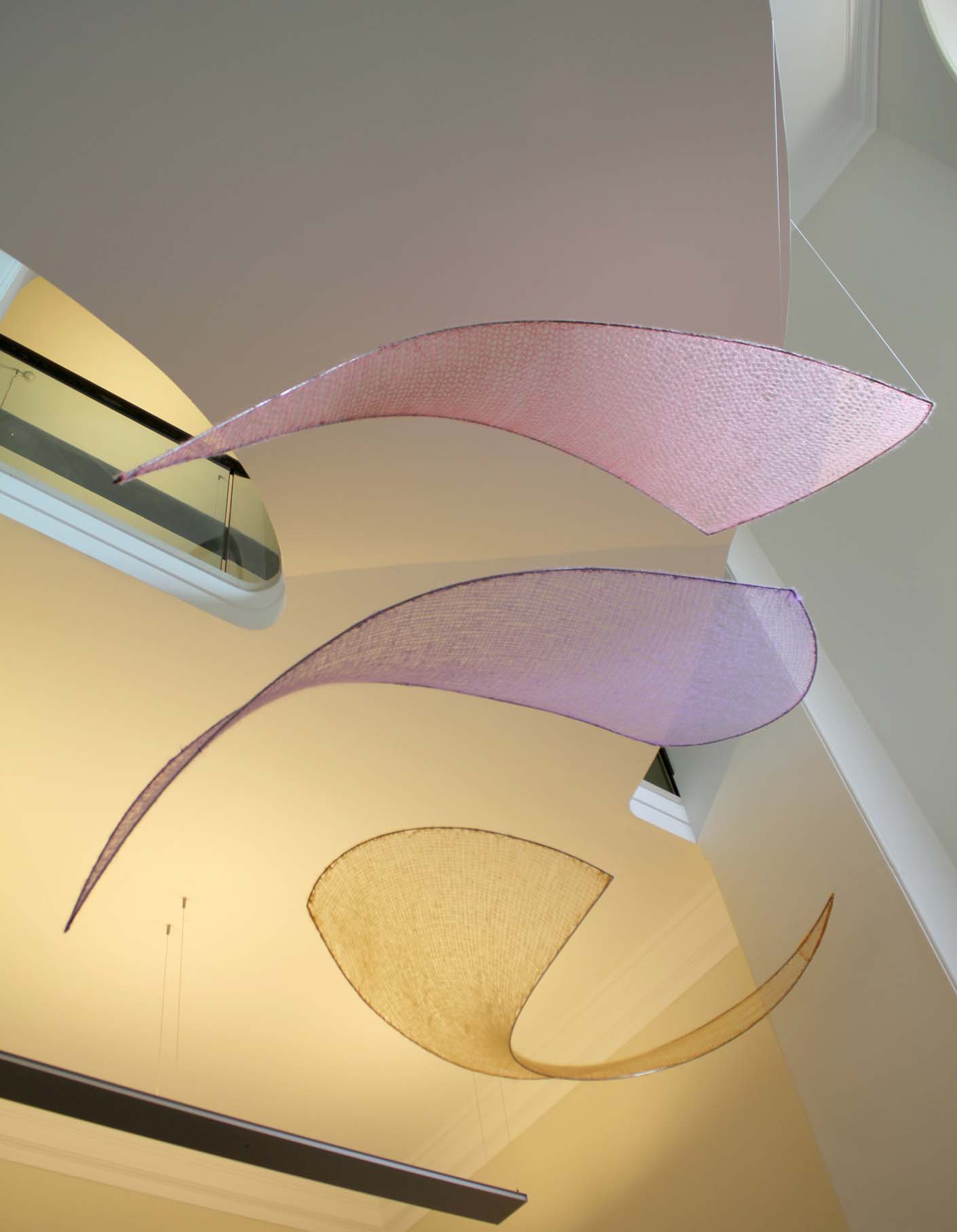


The Slade School of Fine Art.
Installation at the Main Library. University College London
Spinning Out Time seeks for the collectively created work of art. This is the first of a series of projects to be exhibited in architectural spaces under a common concept, “Art for a Better World”. This series arises from a need for communication and comes from the idea that through people’s direct involvement in producing the work, they come to understand and appreciate the message and the processes of the most contemporary artistic creations.
Any person interested in participating in the creative process of a work of art and with basic knitting skills is welcome. The technique to be used, either knitted or crochet, is up to the participant.
A small scale call for participants has been made so far, as a pilot run of the proposal, but it is a work in progress open to new collaborators. These first knitters have made the woven shapes shown here, according the guidelines given by the artist. The wool was carefully chosen for its quality, especially bearing in mind the aesthetic result it offers when light plays on it. 150 balls of wool were selected from a range of warm colours donated by the Spanish company “Lanas Stop”.
The result of their work is like the craftswoman’s stamp; the way of working is like her handwriting. I am interested in working with the idea of creating a unique work of art composed of original elements that work in unison, as an orchestra. The final project consist of designing a space built by these shapes and the processed sound of the knitting sessions. During my stay at the Slade School of Fine Art I have been working with Knitting groups all around London, and new participants are knitting the shapes to be shown in a year, when the production is to conclude.
The experience has been very positive with regard to the participation and the enthusiasm it has generated from its inception. All have responded with a high degree of involvement and the material produced is artistically so interesting that they have brought new ideas to the final finish of the work.